The New Reality of Financial Disputes
Cryptocurrency is no longer a special interest; it is now a common fixture in commercial litigation, insolvency proceedings, and recovery matters. The assets have evolved, and so the investigative methods are also changing.
Most litigation teams have easy access to traditional forensic accountants to reconstruct financial history. These professionals are experts at dissecting bank statements, corporate ledgers, and records obtained through subpoenas – and it’s a well-established praxis. Cryptocurrency operates on different infrastructures. Because of this fundamental shift, standard accounting practices often aren’t enough to outline financials as soon as digital assets (or just suspicions of digital assets) are involved.
The Documentation Gap: When Statements Don’t Exist
Traditional forensic accounting is built on the assumption that a centralized intermediary—like a bank—is keeping ledgers, and that the company targeted kept some form of records in a traditional manner. Investigators typically follow a paper trail of payment processor data and monthly statements to identify counterparties. As we know from several high-profile bankruptcies in the digital assets space, this doesn’t apply in the same degree to crypto firms where ledgers might be kept completely on the blockchain, and communications and approval systems run in very informal manners.
Cryptocurrency removes the intermediary.
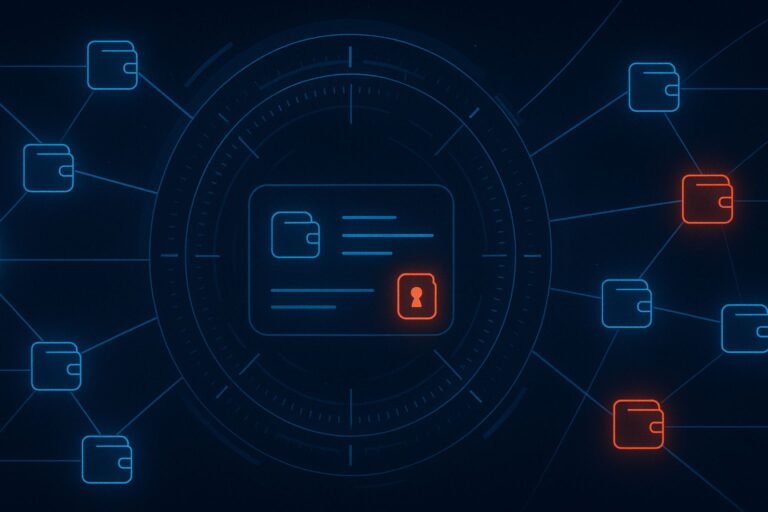
In the world of digital assets, funds are frequently held in unhosted wallets. Here, individuals control their own private keys. There is no bank to subpoena, no monthly statement generated, and no centralized ledger that links a wallet address to a legal name.
Instead, the only record is the blockchain itself. This decentralized ledger tracks transactions between alphanumeric addresses, not people or companies. For legal teams, this creates a structural hurdle: you cannot subpoena a record from institutions that don’t exist – and often the only place to go to is the blockchain ledger itself.

The Tool Gap: Beyond Spreadsheets
Even when a firm recognizes the need for blockchain forensics, they often run into a resource problem. An expensive and hard to use tech stack is involved, and access to tools such as Chainalysis and Elliptic are needed. These tools allow investigators to:
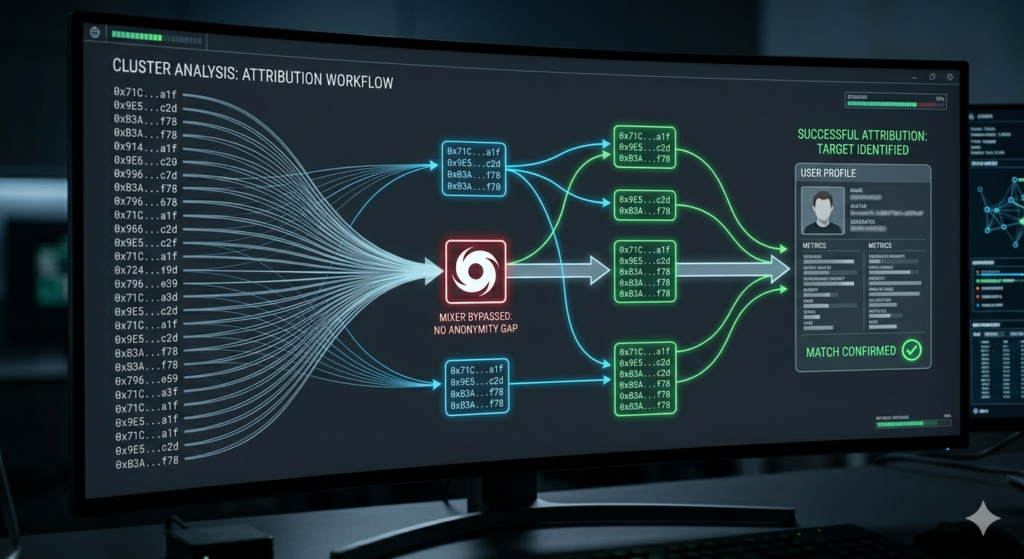
Cluster Addresses: Identify groups of wallets controlled by the same actor.
Attribute Activity: Link to “anonymous” addresses to known exchanges or services.
Apply On-Chain Heuristics: Use behavioral patterns to establish beneficial ownership.
The complexity scales quickly when assets move through “mixers” like Tornado Cash, designed specifically to break the transaction trail, or “cross-chain bridges” that move value between different blockchains. Without the right tools and technical expertise to interpret the data, an investigation usually stops exactly where the most important evidence begins.
Meeting Evidentiary Standards
For blockchain analysis to be useful in court, it must meet the same rigorous evidentiary standards as any other expert testimony. It isn’t enough to “find” the money; you must prove the path in a way that is legally defensible.
A court-ready blockchain forensic report must demonstrate:
- Transparent Methodology: Clearly documenting the heuristics used.
- Reproducibility: Allowing independent experts to verify the findings.
- Chain of Custody: Ensuring the data used as evidence is untainted.
- Contextual Clarity: Bridging the gap between a wallet address and a real-world entity.
On top of that, you must also be prepared to explain it all in layman terms to a court that may have no prior understanding of digital assets, or worse; a hostile attitude to crypto altogether!
Without the forementioned elements, on-chain analysis can be dismissed as speculative. Legal teams need investigators who understand both the architecture of the blockchain and the procedures of the courtroom.

Sphere State Group: The Technical Arm for Litigation
Law firms don’t need to build their own internal crypto-forensics departments – Nor should they aspire to do this. Instead, they need a specialized partner to translate complex blockchain data into actionable legal intelligence.
Sphere State Group serves as the technical investigative arm for litigation teams. We provide the specialized intelligence necessary to support fraud investigations, asset recovery, and evidentiary preparation.
Working alongside counsel and insolvency practitioners, we deliver:
- On-Chain Tracing: Detailed mapping of digital asset movement.
- Beneficial Ownership Investigations: Linking wallets to real-world actors.
- Cross-Chain Mapping: Tracking funds across fragmented networks.
- Expert Reports: Clear, defensible documentation prepared for court.
Partner With Sphere State
Digital asset disputes require more than traditional accounting; they require a technical edge that integrates with legal formats. Sphere State Group works with law firms, general counsel, and insolvency practitioners to bridge the gap between complex code and successful litigation.
If your firm is managing a dispute involving digital assets, our team provides rapid triage and court-ready analysis to strengthen your strategy.
Contact Sphere State Group today to integrate specialized blockchain forensics into your next case.