Bitcoin is often described as “unfreezable.” While the blockchain itself cannot be altered, this belief overlooks how investigations, legal authority, and custody function in real-world cases. In practice, Bitcoin assets are frozen regularly — not by changing the ledger, but by restricting access, control, and onward movement. Typically, this is done on centralized exchanges. As crypto-related fraud, theft, and financial crime continue to rise, asset freezing on the blockchain is a critical tool for investigators, exchanges, courts, and compliance teams. This article explains what asset freezing means in Bitcoin investigations, how it works, and where its limits lie.

What asset freezing means in a Bitcoin context
In traditional finance, freezing is straightforward: a bank account is locked , and funds cannot be moved. Bitcoin operates differently. Transactions are immutable, and there is no central authority with the power to reverse or halt transfers on the blockchain. However, when users move in and out of BTC, either to fiat or to other coins and tokens, the process often touches on centralized exchanges that will respond to freeze requests.
Asset freezing in Bitcoin investigations, therefore, focuses on control, not alteration. It typically involves preventing access to Bitcoin held by exchanges or custodians, while monitoring and containing funds to prevent dissipation. The objective is not to “freeze the blockchain,” but to stop assets from being moved beyond reach. By monitoring the assets in real time and informing the target, it can make it unpalatable for criminals to approach the assets again.
When Bitcoin assets are frozen
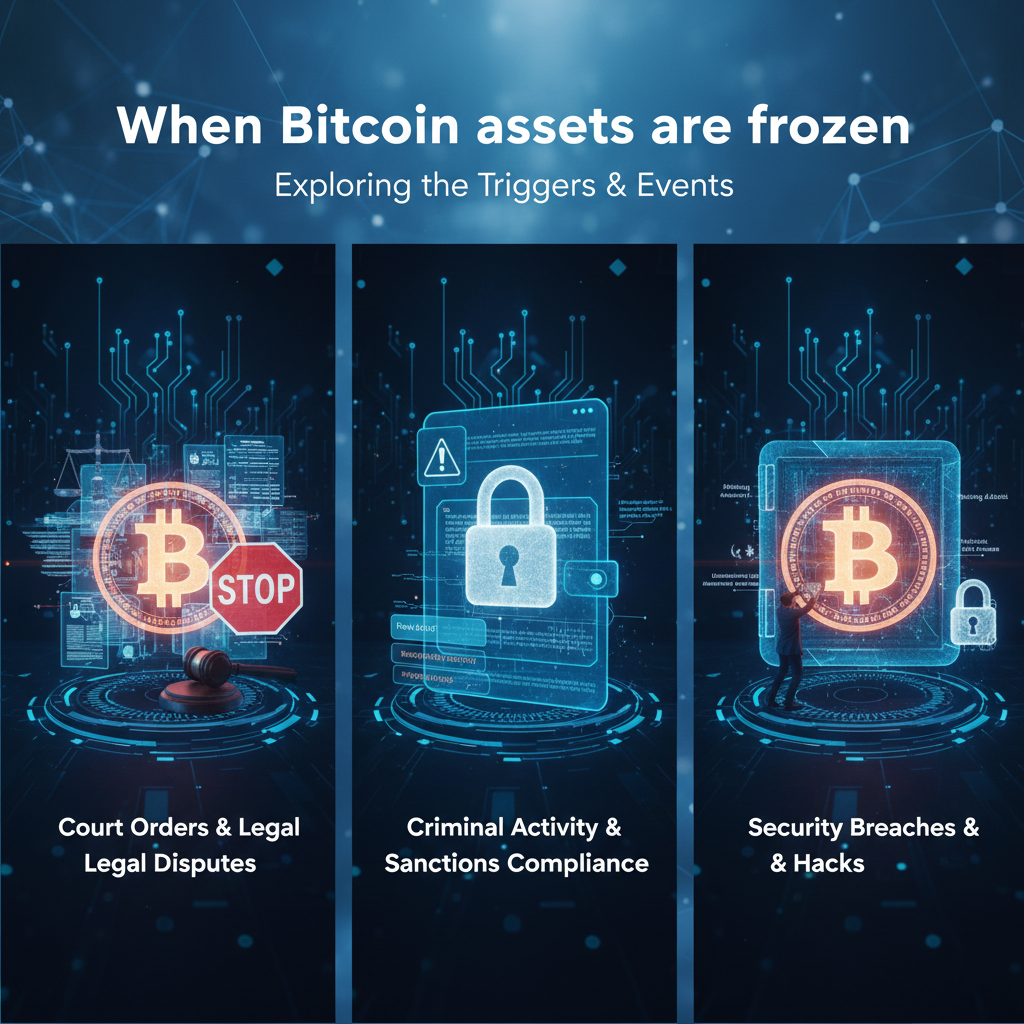
Asset freezing is commonly used in the following scenarios:
- Investment and romance scams, where victims seek to preserve funds before they are laundered
- Exchange-related incidents, including insider theft or suspicious withdrawals
- Money laundering investigations, particularly where Bitcoin is used as a transit asset
- Sanctions enforcement, where wallets or accounts are linked to sanctioned countries and entities
- Civil disputes and insolvency proceedings, where courts order asset preservation
Freezing is time-sensitive. The longer funds remain unrestricted, the greater the likelihood they will be split, mixed, or taken off an exchange.
How freezing works in practice
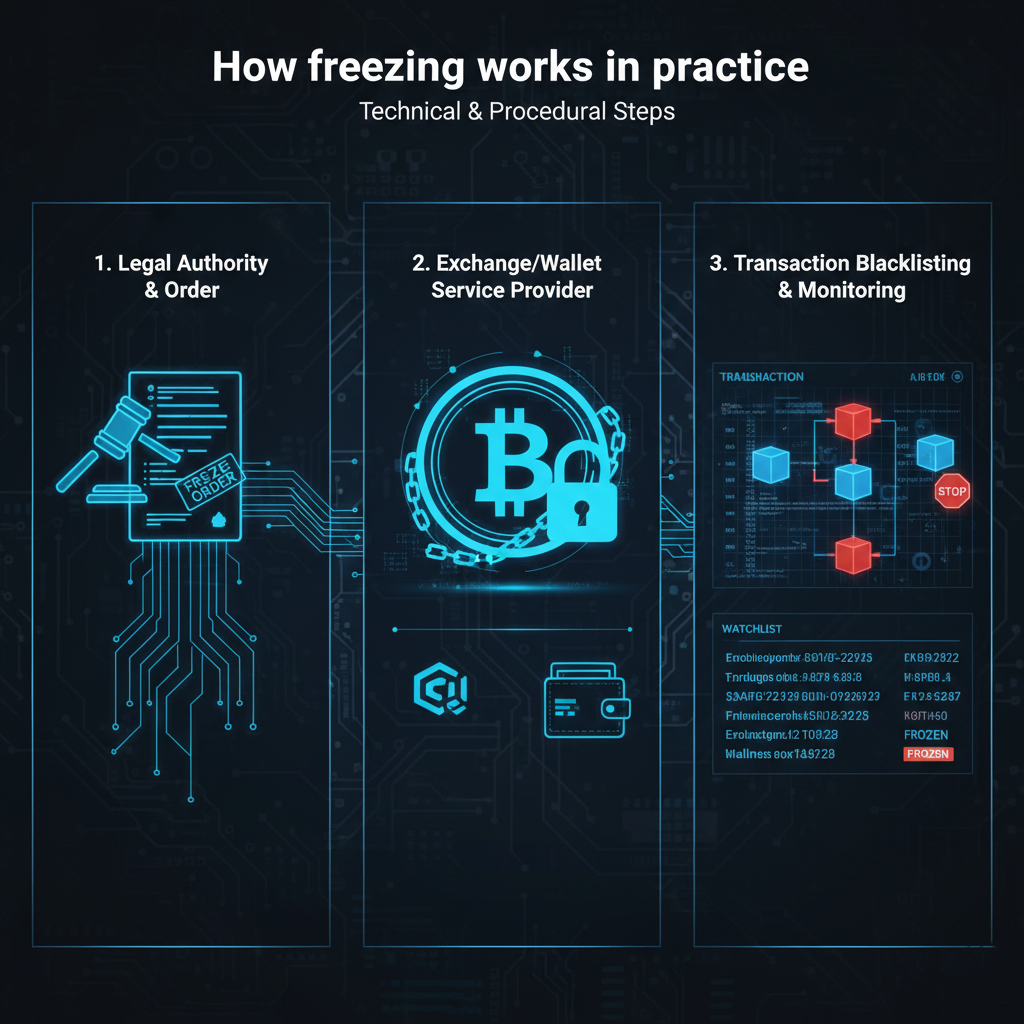
Assets held by exchanges and custodians
Centralized exchanges and custodial platforms are the most effective control points, along with funds held in stable coinds. Where Bitcoin is held in an account tied to KYC information, freezing can be implemented through court orders or law enforcement request. Some exchanges will also give a quick reaction based on request by investigators. Exchanges can suspend withdrawals, preserve balances, and provide transaction records. For this reason, many successful asset preservation efforts begin by identifying whether funds have passed through or remain on a regulated platform.
Self-custody wallets
Freezing becomes significantly more complex when Bitcoin is held in self-custody wallets. There is no technical mechanism to stop a private key holder from spending funds. In these cases, freezing relies on legal and investigative pressure rather than technical control.
Common approaches include:
- Freezing or restraining orders issued against identified individuals, while simultaniously targeting the individual’s real-world assets.
- Disclosure orders requiring intermediaries to reveal information linked to wallet activity
- Search and seizure warrants targeting devices that may contain private keys
These measures are jurisdiction-dependent and enforcement varies widely.
The role of blockchain analysis
Blockchain analysis underpins nearly every Bitcoin freezing effort. Investigators trace transaction paths to:
- Identify address clusters and wallet behavior
- Track funds through layering, peeling, or mixing activity
- Detect interaction with exchanges, OTC desks, or custodians
- Provide evidentiary support for legal applications
Analysis does not freeze assets on its own, but it determines where freezing is possible and when action must be taken.
Limitations and risks
Bitcoin asset freezing is not guaranteed, and there are clear limitations:
- Jurisdictional fragmentation enforcement power stops at borders
- Speed of transactions funds can be moved within minutes
- Privacy-enhancing techniques mixers and coinjoin transactions complicate tracing
- Uncooperative or offshore platforms some entities resist or delay compliance
- Exclusive self-custody without intermediaries, leverage is limited
These realities mean freezing is most effective when initiated early and supported by strong evidence.

Practical considerations for different stakeholders
Victims
Early reporting and evidence preservation are critical. Delays significantly reduce the chance that assets can be restrained.
Exchanges and custodians
Clear internal procedures for asset freezing, legal review, and law enforcement engagement are essential. Delays or ambiguity can result in assets leaving the platform permanently.
Institutions and corporates
Crypto exposure should be covered by incident response planning, including legal escalation paths and forensic support. Asset freezing is far more effective when preparation exists before an incident occurs.
Why coordination matters
Bitcoin asset freezing is rarely successful through legal action alone or technical analysis alone. It requires coordination between:
- Blockchain investigators
- Legal counsel
- Exchanges and service providers
- Regulators or law enforcement
When these elements operate in isolation, assets are often lost before intervention occurs.
Conclusion
Bitcoin may be decentralized, but it is not beyond restraint. Asset freezing remains a viable and frequently used tool in Bitcoin investigations — provided action is taken quickly, evidence is solid, and enforcement targets realistic control points.
Understanding how freezing works, where it fails, and what conditions improve success is essential for anyone dealing with financial crime, compliance, or asset recovery in the digital asset space.